On the surface, or from within
Tea, coffee and red wine sit on the surface, and a scale and clean usually lifts a good deal of it. Colour coming from inside one tooth needs a closer look.

Two coffees a day for twenty years, and now your front teeth look a shade darker than you remember. That’s usually surface stain, and a clean lifts a lot of it. One tooth darker than the rest, or an old filling gone grey, is a different story, so we check which you’ve got before you spend a cent on whitening.
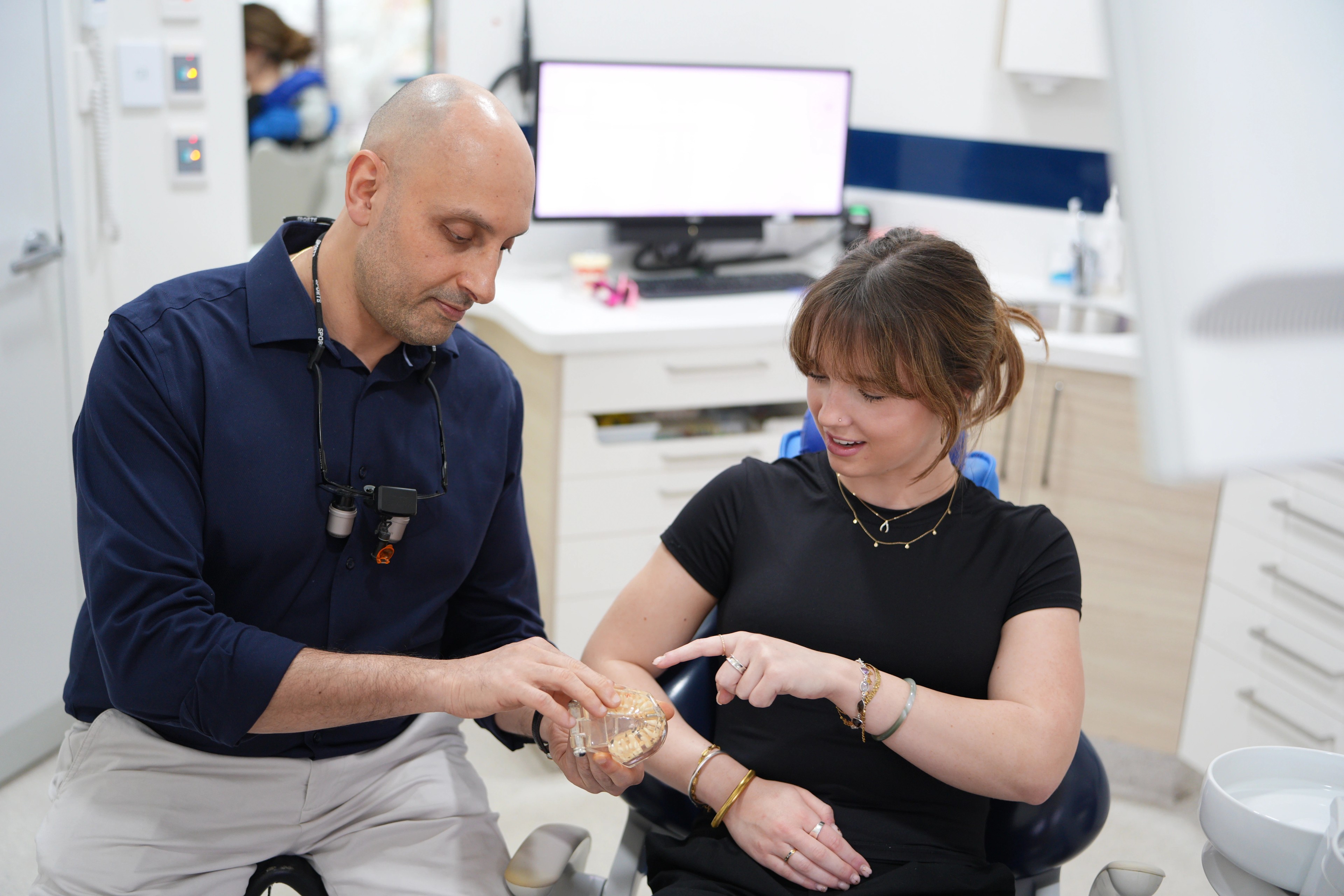
Colour is a clue, not a diagnosis. We check whether the change covers every tooth or just one, look at your gums, and work out whether a filling, crown or veneer is part of what you’re seeing.
Tea, coffee and red wine sit on the surface, and a scale and clean usually lifts a good deal of it. Colour coming from inside one tooth needs a closer look.
Whitening lightens natural enamel. Fillings, crowns and veneers stay the shade they were made in, so we sort out which of your teeth are which first.
Decay, worn enamel or gums that have pulled back can make whitening sting, so we check them before you buy a kit or book a session.
Brighter all over, a more even colour, or one tooth that stops standing out. Each one points to a different fix.
Surface stain, one dark tooth and old work that’s stopped matching each have their own fix. Pick the one that sounds most like your mirror.

A surface stain, a change inside one tooth and a filling that’s stopped matching can look almost identical in the bathroom mirror. An intra-oral camera takes a close-up of the tooth, so you can see what your dentist sees.
That’s why whitening isn’t the answer to every colour change. It works on natural enamel and does nothing for fillings, crowns or veneers. For one tooth or one patch, a clean, bonding or a new filling is often the more direct fix, and bonding usually takes a single visit.
Whitening can cause tooth sensitivity and gum irritation, and a product that touches the gums can cause chemical burns. If one tooth has darkened, or you have fillings, crowns or veneers at the front, get advice before trying a chemist kit. We’ll tell you whether whitening suits your teeth and gums, and which product. Results vary from person to person.

It shows us how much has changed. We’ll ask when you first noticed it, whether it’s one tooth or many, and which fillings stand out.
Whether it’s new or gradual, all over or one tooth, or sitting right next to a filling, crown or veneer.
Teeth, gums and old work, with a camera close-up, and an X-ray if one tooth has darkened.
A scale and clean, in-chair whitening, a take-home POLA kit, bonding, or a new filling or crown.
What you can realistically expect from the option you pick, and what it costs, before anything starts.
Whitening suits natural teeth with healthy gums and surface or age-related yellowing. It’s a poorer fit for one dark tooth, sensitive teeth or a smile with a lot of old fillings, and we’ll say so if that’s you.
Book a colour appointmentBefore you buy a product or book whitening, make sure it deals with the cause. Sometimes a clean, bonding or a new filling is the better use of your money.
If colour comes with chips, gaps or worn edges, these go further: a clean, take-home whitening and tooth-coloured bonding.
You might also want to read
You might also want to read
You might also want to read
Most colour questions come back to three things: what’s on the surface, what’s inside one tooth, and what’s an old filling or crown.
Because brushing clears the day’s plaque, not every kind of stain. Tea, coffee, red wine and tobacco build up in tiny grooves on the surface, and hardened tartar picks up colour too. A scale and clean removes most of that. Colour inside a tooth is a different matter.
If the change is new, affects one tooth, or isn’t shifting with your usual routine, book a check before buying a whitening product. We’ll show you whether it’s surface stain, a change inside the tooth or an old filling that no longer matches.
Not exactly, but your teeth often look lighter afterwards. A scale and clean lifts surface stain and tartar, which makes a real difference if tea or coffee is the cause. It won’t change colour inside a tooth, and it won’t lighten a filling, crown or veneer.
It’s also a sensible first step before whitening, because your gums and enamel are checked at the same visit. If one tooth is darker than the rest, that tooth is looked at first. We’ll tell you what a clean will and won’t change before you spend money on whitening.
Not usually with a standard kit. A single dark tooth often has a cause inside it, like an old knock or a nerve that has died, and whitening the whole smile can make it stand out more. We look at the tooth, its history and the gum around it, usually with an X-ray.
When you book, we’ll note that it’s one tooth. If the nerve needs treating, that comes before any cosmetic fix. Afterwards, bonding or a crown can match it to its neighbours, so nothing cosmetic ends up covering a problem.
No. Whitening lightens natural enamel only, so the teeth around an old filling, crown or veneer get lighter while it keeps its shade. That’s how a front filling nobody ever noticed can suddenly look darker after whitening.
We check which surfaces are natural and which are restored. Often the teeth are whitened first, and the filling is then replaced or bonded to match the new shade. You’ll know the cost and timing of both steps before you begin.
Both are professional whitening, done in different places. In-chair whitening happens here, during an appointment. A take-home POLA kit comes from us with instructions: about 20 minutes a day for one to two weeks, then the occasional top-up. Supermarket and online kits are something else again, with no dentist checking your teeth first.
We’ll say which one suits your teeth, gums, old fillings and the shade you’re hoping for, and what neither will change, starting with crowns and veneers.
Get advice first if the colour change is new, affects one tooth, or sits next to fillings, crowns or veneers. A product can lighten natural enamel without touching the reason one tooth is darker, or the shade of old work. It can also sting if there’s decay or gum recession you don’t know about.
A check-up separates surface stain from deeper colour, and tells you whether a clean, in-chair whitening, a take-home kit or bonding makes sense. You can still choose a chemist product afterwards, knowing your gums and enamel are ready for it.